"Schedulers kill your reach." "Links get you punished." You have heard it all, usually from someone selling a workaround. This page collects what the people who actually run the algorithms said, with names, dates and links to every original statement.
Schedule through the platforms' official APIs. Reach stays decided by your content, exactly as the record below shows.
Fifteen claims that cost marketers real money in workarounds, superstition and wasted hours. Each one answered by the platforms themselves.
"Posting through a scheduling tool tanks your reach. Always post natively."
The feed does not rank the door your post walked in through. It ranks the post.
This is the most expensive myth in social media management: it keeps whole teams copy-pasting content by hand at 9:00 sharp. LinkedIn answered it in one word.
"Does posting from a 3rd party tool impact my reach?" No. "It's all about matching the right content to the right audience."
"No, scheduling a post is not going to hurt its reach. I schedule posts all the time. Feel free to do so without worrying about it affecting your reach one way or the other."
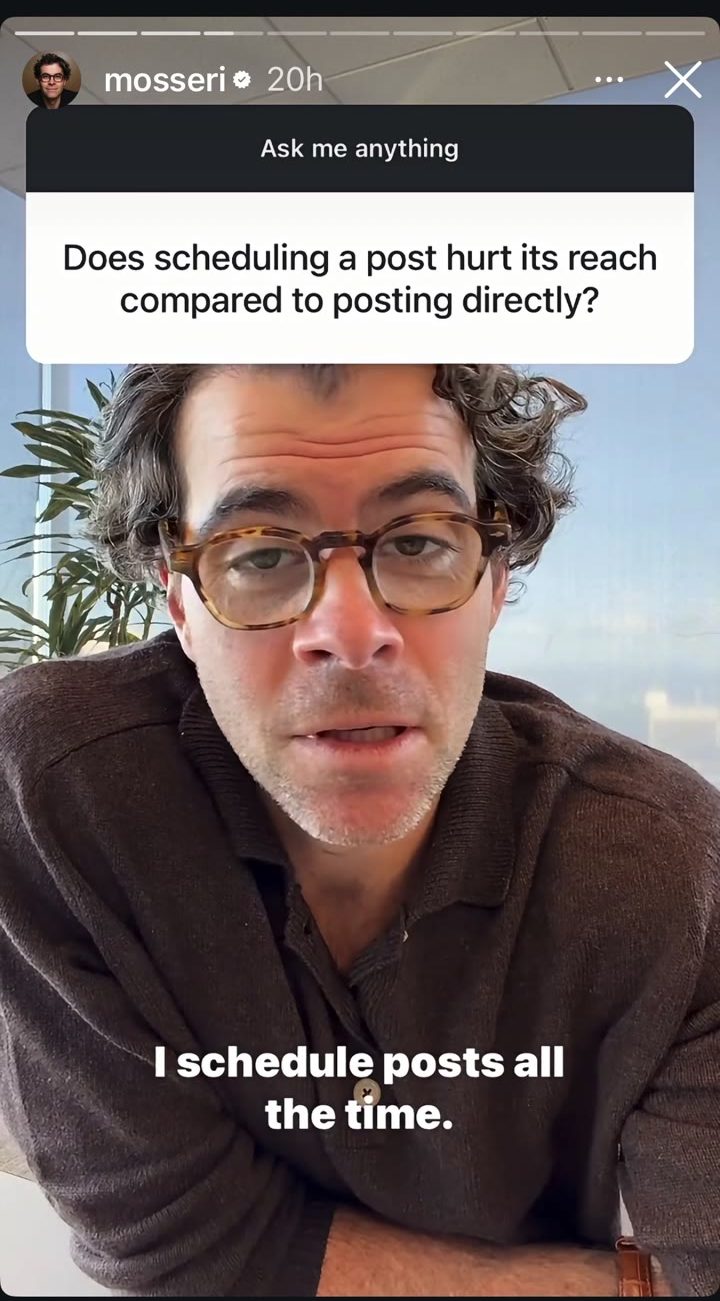
Still from Adam Mosseri's Instagram Stories Q&A, October 23, 2026. Video © Instagram / Adam Mosseri.
He was answering the exact question "Does scheduling a post hurt its reach compared to posting directly?" in his Ask Me Anything on October 23, 2026, the second time he has said it on camera.
What actually matters: scheduling tools publish through the platforms' own official APIs, the same pipes the platforms built for exactly this purpose. The ranking signals are engagement signals on the content itself: watch time, comments, shares. Not the publishing surface.
"Add a link to your LinkedIn post and the algorithm buries it. Put the link in the comments instead."
LinkedIn does not punish links. It punishes posts that exist only to push you somewhere else.
Straight from the person who runs LinkedIn's feed ranking, in a video Q&A answering "Does adding a link in my post impact its reach?":
"We don't intentionally limit the reach of posts with links in it."
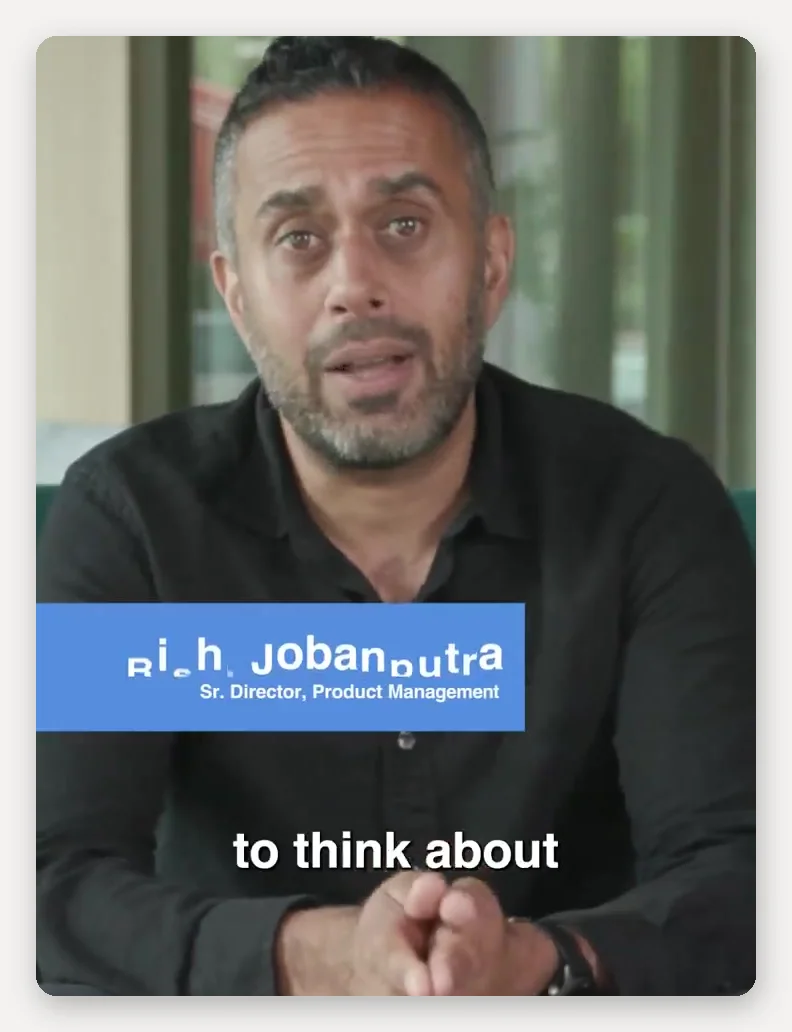
Still from LinkedIn's video Q&A. Video © LinkedIn / Rishi Jobanputra.
The catch he spells out in the same video is about value, not URLs: when the sole purpose of a post is to drive traffic to the link, it creates little value for the viewer, and that is what impacts reach. His practical advice, restated a week later:
Make sure your post "gives enough context that it could stand alone without the link."
Instagram, same story: Adam Mosseri publicly stated that even writing "link in bio" does not affect a post's reach, adding that he is "more than welcome" to it himself (as reported by EMARKETER ↗). So write the post so it works on its own, then add the link. No comment-section gymnastics required.
Why links in Instagram comments and captions are not clickable at all? Mosseri explained it on October 30, 2026: clickable links in comments end up abused “mostly by spammers”, and links everywhere would change the type of content on Instagram toward more publishers and text, “less about creativity”. It is a product choice, not a reach penalty.
“So generally speaking, we support links through things like the link sticker and stories, but we do not embrace links across all of the channels on Instagram because I think that would make us a lot more like other social media apps, and we want to be our own thing.”

Still from Adam Mosseri's Instagram Stories Q&A, October 30, 2026. Video © Instagram / Adam Mosseri.
"More hashtags, more reach. There is a magic number and you are missing it."
Hashtags are navigation. They label content, they do not boost it.
"Hashtags are a nice to have, not a need to have."
"Contrary to popular belief, hashtags are not a way to get more reach." Useful for search, Mosseri added, but they do not improve distribution.
Corroborated in person: at a March 2026 journalist briefing, LinkedIn execs described hashtags as "a steering wheel, not a gas pedal", they route content to the right audience, they do not accelerate it (Future Social ↗). Instagram has meanwhile been limiting hashtags per post, which tells you everything about their ranking weight.
"Comment 'CFBR' on each other's posts. Engagement pods beat the algorithm."
LinkedIn's answer is a flat no. And they actively remove pod groups.
Asked whether people should comment "CFBR" ("Comment For Better Reach") to amplify others: "My short answer is No." Comments should add to the discussion; to support someone, react or repost instead.
What actually matters: LinkedIn has publicly confirmed removing groups that behave like engagement pods. Manufactured engagement is not a growth hack, it is a detection signature.
"Spend 15 minutes engaging before you post, to warm up the algorithm."
There is no warm-up meter. Instagram calls this one a rumour.
Engaging with content on Instagram right before you post does not improve your reach. Per Adam Mosseri, "it's just a rumour."
What actually matters: being present after you publish, replying to real comments, is community management and worth doing for its own sake. Performing activity for the algorithm's benefit beforehand is theater.
"AI-written posts get buried. The algorithm can tell, and it punishes you."
The feed does not check which tool wrote the caption. It checks whether anyone stopped scrolling.
The fear that stops half the industry from using AI at all. The people who run the feeds have been asked directly, and none of them said "we punish AI".
"We do not throttle reach of AI content just for being AI content. Our idea with ranking is to connect you with content that you like and not with content that you're not interested in, whether or not it's AI."

Still from Adam Mosseri's Instagram Stories Q&A, October 16, 2026. Video © Instagram / Adam Mosseri.
In the same answer he was blunt about the other side: "there's some great AI content and there's a lot of slop out there." Instagram wants viewers to know when something was generated with AI, is working on automatic labels and on "strong incentives for people to self-disclose". Labels, not throttling.
"There's a lot of AI content on the platform. I actually think that's okay as long as it's content that you're interested in and that it's labeled. I think people should know what they're looking at and whether or not it is AI generated or not."
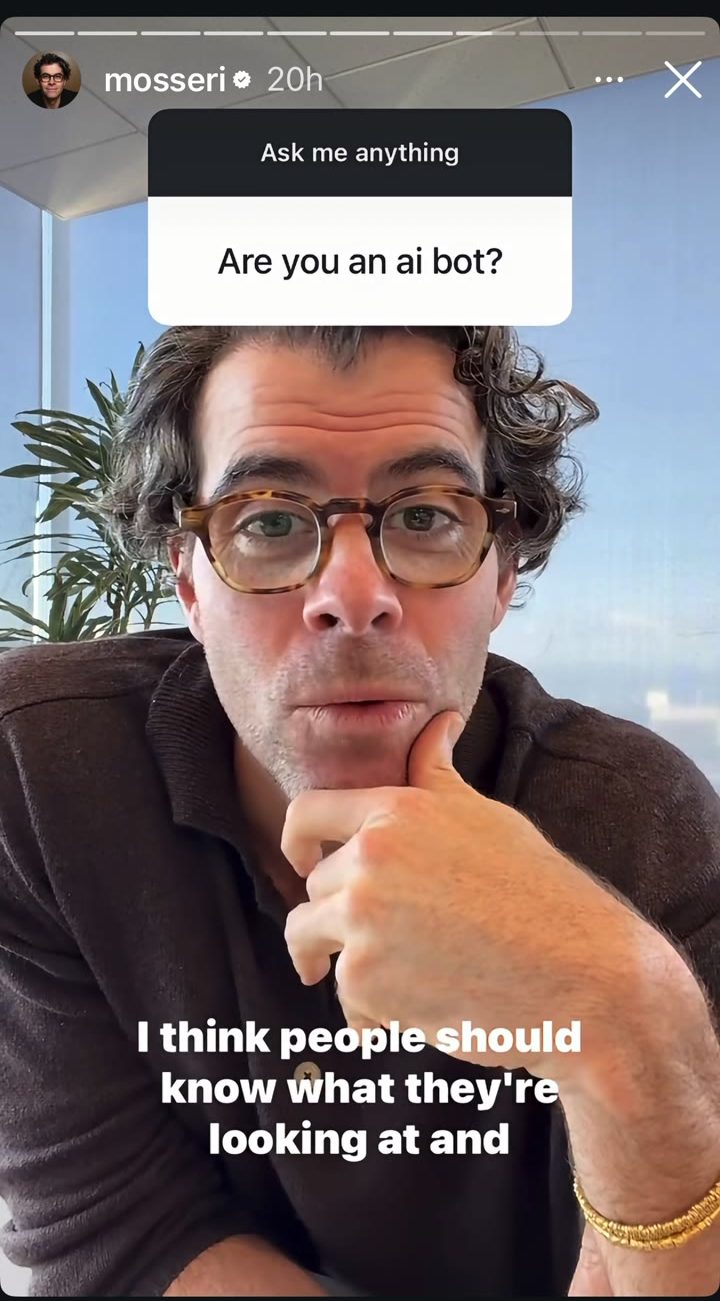
Still from Adam Mosseri's Instagram Stories Q&A, October 23, 2026. Video © Instagram / Adam Mosseri.
"I don't think we should filter out AI content. I think we should let you know if content is AI content or not."
"YouTube welcomes creators using AI tools to enhance storytelling, and channels that use AI in their content remain eligible for monetization."
The catch, also on the record: what YouTube does demonetize is "AI-generated content made with generic or unoriginal templates giving the impression of mass production without adding the creator's original, authentic insights or perspective" (YouTube monetization policies ↗). And for realistic media, disclosure is required: "We require creators to disclose if AI was used to edit or generate realistic content in their videos" (How YouTube Works ↗).
What actually matters: the penalty is for sameness, not for AI. A post that reads like a thousand others gets scrolled past in a second, and that silence is the signal the ranking picks up. Let AI write the draft, then add what only you have: your client's numbers, your opinion, your photo from the actual event. Label photorealistic AI images and video. How this plays out on LinkedIn: why generic AI content kills organic reach ↗.
"Let an AI agent publish your posts and your account gets flagged as a bot."
It depends entirely on which door the agent uses. The official one is built for exactly this.
AI agents in ChatGPT or Claude can now draft, schedule and publish posts. The question is not whether an AI pressed the button, but how it got access.
"This guide shows you how to publish single images, videos, reels (single media posts), or posts containing multiple images and videos (carousel posts) on Instagram professional accounts using the Instagram Platform."
The same documentation caps it at 100 API-published posts per 24 hours and tells developers to check that limit "especially for apps managing scheduled posts." Meta does not just tolerate automated publishing. It writes the manual for it. And on reach, Instagram already answered in Myth #1: scheduled posts do not affect it.
"You can't attempt to create accounts or access or collect information in unauthorized ways. This includes creating accounts or collecting information in an automated way without our express permission."
What actually matters: ask how the agent connects. Official API through an approved app, authorized with OAuth, no password shared: that is the same pipe every scheduling tool uses. Browser automation, a shared password or an "unofficial API": that is what gets accounts restricted, and it has nothing to do with AI.
"Instagram throttles your organic reach so you buy ads. And the day you stop paying, organic drops."
Ads and organic run on separate tracks. Buying one does not move the other.
The oldest conspiracy in social media, and the one that pushes small brands into ad spend they never planned. Asked point blank whether paid ads affect organic reach, the Head of Instagram called it out by name.
"No, buying ads on Instagram isn't going to increase or decrease your organic reach. We also don't suppress reach to get people to buy ads, contrary to that accusation that we get all the time. It would make no sense."

Still from Adam Mosseri's Instagram Stories Q&A, October 16, 2026. Video © Instagram / Adam Mosseri.
His reasoning is pure business logic: if your content keeps people engaged, they use Instagram more, and that is what lets Instagram "easily sell advertising slots to other advertisers elsewhere." Organic tries to show the best content, ads try to show the most relevant ads, "and you can use one or the other, and they will not affect each other."
What actually matters: boost a post because the campaign needs paid distribution, never as a ransom payment to the algorithm. Plan organic and paid together in one calendar so you can see what each one actually delivers.
"Stop doomscrolling memes and competitors. What you watch on Instagram changes how your own posts get distributed."
Your feed is your feed. It does not decide the reach of what you publish.
A favourite of social media coaches: the idea that your personal scrolling trains the algorithm to file your own account under the wrong topic.
"No, what you see and what you interact with on Instagram doesn't affect the reach of what you post. Those things are separate."

Still from Adam Mosseri's Instagram Stories Q&A, October 16, 2026. Video © Instagram / Adam Mosseri.
The only link runs the other way: what you post can be a signal for what you might want to see. But "if you post about something or don't post about something, it's not going to help or hurt your reach of the things that you actually share on Instagram."
What actually matters: research competitors and trends as much as you like, from any account. Reach is earned by how your audience responds to your posts, not by what you watched last night.
"Trial Reels hurt your account. Use them too often and Instagram flags you."
Testing is welcome. Recycling the same reel to game the test is not.
Trial Reels show a reel to non-followers first, so you can see how it lands before your audience does. Creators worried that heavy use would count against them. Mosseri drew the line clearly.
"If you're just trying to experiment with lots of different reels and you want to use your trial reels a lot, that's totally fine. It's not going to affect your account in a negative way."

Still from Adam Mosseri's Instagram Stories Q&A, October 16, 2026. Video © Instagram / Adam Mosseri.
"The only concern is if you keep posting trial reels of the same reel [...] That's not okay. We're going to crack down on that."
Two weeks later he confirmed it again, this time about volume: several trial reels in one day are fine, as long as they are different reels.
“It's totally fine to post multiple trial reels in the same day. Just don't post multiple trial reels of the exact same reel. That's just sort of a bad growth hack, and we're going to crack down on it, and it's not going to get a lot of distribution.”

Still from Adam Mosseri's Instagram Stories Q&A, October 30, 2026. Video © Instagram / Adam Mosseri.
What actually matters: use Trial Reels as a real A/B test: different hooks, different formats, different ideas. Re-uploading one reel again and again to farm extra chances is now officially on Instagram's enforcement list.
"The algorithm rewards rage bait. Comments are king, so make people argue."
Comments count. Sends to a friend count a lot more.
The theory goes like this: controversy drives comments, comments drive reach, so the angrier the better. Asked directly whether the algorithm favors negativity, the Head of Instagram explained how the ranking actually weighs it.
"The thing that we definitely do value in the ranking model that might correlate with negativity is comments, but it's not the most important part of value by a long shot. We actually focus a lot more on finding reels and photos that you might send to a friend than you would post to everybody or comment on."

Still from Adam Mosseri's Instagram Stories Q&A, October 23, 2026. Video © Instagram / Adam Mosseri.
In the same answer he said Instagram does not "do anything on purpose to try to promote negativity" and that the ranking looks for content people will say "was worth their time", watch to the end, like or send to a friend.
What actually matters: before a post goes out, ask who would send it, and to whom. Useful checklists, honest numbers and genuinely funny industry truths get forwarded. Bait built only to farm comments gets the comments and little else. More on the signals in our Instagram algorithm 2026 guide.
"Without Reels you cannot grow on Instagram anymore."
Photo accounts still grow. Carousels do the heavy lifting.
Photographers, illustrators and B2B brands keep hearing that Instagram is video-only now. Asked whether a photographer can grow without making Reels, Mosseri started his answer with one word: "Yes."
"There are definitely accounts on Instagram that grow without posting any reels by just posting photos."

Still from Adam Mosseri's Instagram Stories Q&A, October 23, 2026. Video © Instagram / Adam Mosseri.
His practical advice: carousels "tend to do better than single photos because they get you multiple at bats that can show up multiple times for the same person", and adding music can help when it fits creatively. He also admitted that people interact with video more, "but there's still lots of people who like to see photos, and so we want to make sure we support them, too."
What actually matters: Reels are the strongest format for reaching non-followers, not a membership fee. Mix Reels with carousels and let the results decide the ratio.
"Edit your Reels in CapCut or any app other than Instagram's and the algorithm buries them."
Instagram does not care where you edited it. It cares whether another app's logo is on it.
Asked point blank "What if I edit my video with CapCut?", the Head of Instagram opened with: "That's not a problem."
“We don't demote content for being created with other apps other than ours, as long as they don't have watermarks on them. If you actually have a logo advertising in their app, then yeah, it's going to get less distribution.”
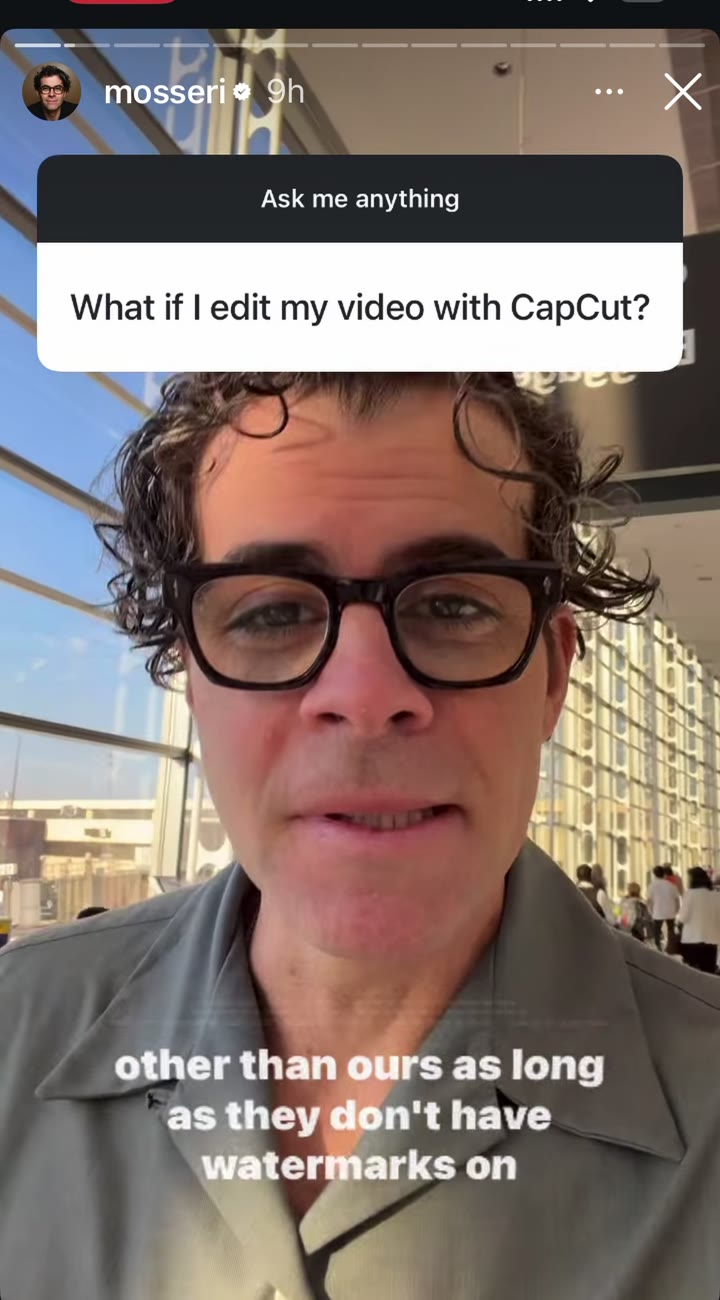
Still from Adam Mosseri's Instagram Stories Q&A, October 30, 2026. Video © Instagram / Adam Mosseri.
He did recommend Instagram's own Edits app, which is "getting really good" and about to launch a desktop version, "but if you want to use CapCut, great, no problem."
What actually matters: export clean files with no editor watermark or branded end card, and never repost a video with another platform's logo on it. Same logic as Myth #1: Instagram does not rank the tool or the door the post came through, it ranks what people see.
"Archive or remove a post from your grid and the algorithm punishes your whole account."
Removing one post from the grid touches that post only. Everything else keeps its reach.
Rebrands, ended campaigns and offboarded clients all leave posts a brand would rather not show on its profile. The fear was that tidying up costs reach.
“It's not going to affect the reach of anything else you post, but it will mean that that post might get a little bit less reach because anybody who goes to your profile won't see it, so they won't be able to tap it. But that's usually a very, very small percentage of your reach.”
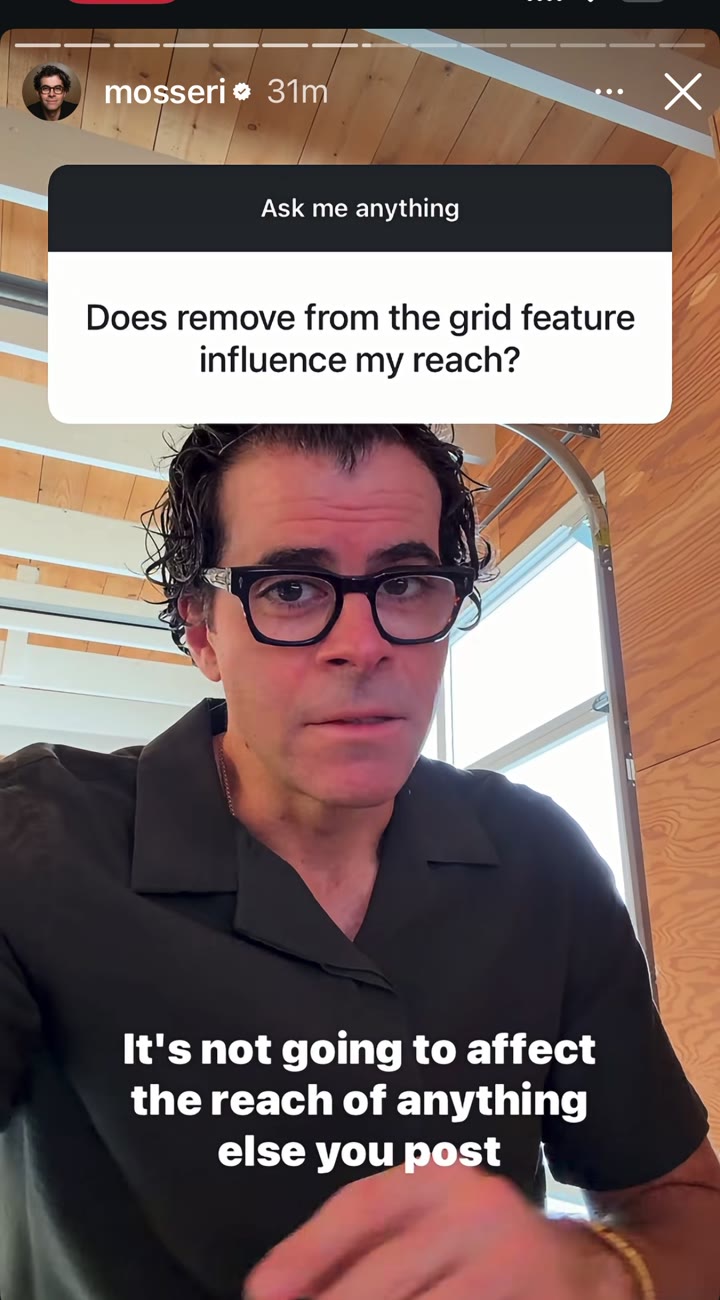
Still from Adam Mosseri's Instagram Stories Q&A, October 30, 2026. Video © Instagram / Adam Mosseri.
What actually matters: curate the grid whenever the brand needs it. The only cost is the small share of views that post would have got from profile visits.