Are Brands Trading Depth for Virality?
.webp)
%20(1).webp)
If you’ve ever sat through a tense Monday sync where someone whispers “we might be heading toward a social media crisis,” you already know the strange double-life brands live now. Half your team begs for depth (context, meaning, actual brand sense) while the other half is reverse-engineering whatever chaotic, two-second meme just hijacked the feed. And somehow everyone pretends this tug-of-war is normal.
Virality has turned into a vending machine for approval. Press the right button, get a spike. Press the wrong one… well, false information travels six times faster than anything you clarify, and the wrong version of your message will probably finish breakfast before your legal team finishes sentence one.
No judgment, this system pushes even seasoned marketers into strange decisions. But the more brands chase those quick hits, the more they unknowingly load the first domino of the next meltdown. A quiet one. The kind no one admits they helped set up, yet everyone later swears they “saw coming.”
{{form-component}}
The Algorithm Has Officially Rewired Brand Priorities (And It Shows)
There’s a strange tension inside every marketing team now… a quiet tug-of-war between people who want depth and people who want numbers, even if those numbers later trigger a brand social media crisis no one has the energy to handle. You’ve probably felt the shift yourself: the algorithm didn’t just change distribution; it changed behavior inside meeting rooms. And, perhaps more painfully, it changed expectations. Suddenly, “meaning” became optional, but “metrics” became mandatory.
When “Depth” Is a Meeting Word and “Virality” Is a KPI
It’s almost funny how easily the algorithm reshaped priorities. CMOs still ask for alignment and long-term cohesion, but the dashboards sitting in front of social teams reward faster, louder, now. Humans already overweight short-term wins, but social platforms double down: visible reactions, views, reach (all the surface numbers) are elevated as proof of “good work.”
And brands now make creative decisions based on numbers they barely understand and sometimes can’t even justify. You’ve seen it. Someone pulls up performance charts and somehow the loudest spike in the graph becomes the north star, even if it has zero connection to the brand, the product, or basic sanity.
There’s no blame here: this pressure system nudges everyone toward the same cliff.
The Spikes That Feel Good but Age Terribly
The spike-chasing era has given us some… memorable choices. Entire campaigns shaped around unrelated dance trends. Meme references approved by someone who probably shouldn’t be approving memes. “Reactive content” that reactivates for all the wrong reasons.
The human brain loves novelty; novelty outperforms context; and novelty tricks teams into believing they’re “in culture,” even when the content itself quietly prepares the ground for the next social media backlash.
And the data supports the danger. False information spreads six times faster than the truth — which means a misaligned, meme-chasing post doesn’t just risk being mocked; it risks morphing into something your team has to handle social media crisis protocols for.
The most painful part is these short-lived wins often age like abandoned milk. The idea that felt clever in Slack becomes the idea you avoid mentioning on Monday. But the algorithm doesn’t care. A spike is a spike. A spiderweb of unintended consequences is still “engagement.”
And that’s the trap. Virality rewards immediacy. Depth rewards longevity. But the algorithm only shows you the first part… until the second part hits the news cycle or a thread you really didn’t want to read.
Virality Has a Dark Side: It’s the Fastest Delivery System for a Crisis
If virality had a warning label, it would read something like: “May cause instant reputational combustion. Consult your legal team before use.” And honestly, you already know this, because every time a trend takes off, a small part of you wonders whether you’re accidentally prepping the next brand social media crisis without meaning to. Virality rewards speed. Crisis punishes it. And the algorithm sits in the middle, emotionally indifferent.
Crisis Speed Is Not Human — It’s Algorithmic
One of the most uncomfortable truths, and perhaps the one no one wants to say out loud, is that crisis velocity has outpaced human response entirely. According to research, 69% of brand crises spread internationally within 24 hours — and 28% spread within the first hour:
That means your worst moment can reach multiple countries before your CEO finishes a single round of “Wait, what are we talking about?” And this is exactly why social media crisis monitoring is structural. It’s the cost of being visible.
{{cta-component}}
Truth Is Slow. Outrage Is Jet-Fueled.
The algorithm doesn’t reward accuracy; it rewards intensity.
So while your team writes a careful, polite draft meant to clarify things, someone with a screen recording and a short fuse has already generated a version of your narrative that outruns your correction by breakfast. You can’t handle social media crisis effectively if the wrong version of your message gets algorithmic priority before your official words even appear.
The Algorithm Doesn’t Care That You’re Having a Bad Day
You’ve likely seen this play out. Posts loaded with emotional heat outperform nuance. Negative sentiment triggers more comments, which triggers more visibility, which triggers more pain. It’s not personal; it’s math — unpleasant math, but still math.
This loop is why crisis escalation feels so cruel. By the time your team drafts a measured social media crisis communication statement, your mentions have already turned into a publicly accessible burn log. A single screenshot mutates into commentary, commentary mutates into threads, and threads mutate into opinion pieces that treat your brand as a cautionary case study.
It’s uncomfortable, but it’s also predictable. Virality accelerates exposure. Exposure accelerates outrage. Outrage accelerates scale. And once you understand that chain, you see the problem clearly: the algorithm isn’t the villain. The velocity is.
The real question is whether your brand is prepared for that velocity… or whether it keeps pretending it can outrun physics.
Viral Wins Often Cost Long-Term Trust
If virality had a return policy, most brands would demand a refund within a week. The numbers look great on the dashboard — the dopamine hits, the team high-fives a little too quickly — and then, just as everyone starts congratulating themselves, the first signs of decay show up. A thread you didn’t ask for. A “y’all seeing this?” post from someone with a following you quietly fear. A lukewarm comment turning into a social media backlash before lunch.
Virality always feels like acceleration. Trust erodes in slow, quiet drips… until it doesn’t.
The Loyalty Cliff No One Talks About
According to research, 70% of consumers leave after just two negative encounters, and 24% leave after one:
So a single viral misstep (one reactive post, one snappy reply, one misaligned trend) can quietly shave off a quarter of your future customers. Not years from now. Immediately.
This is the psychological math of modern consumers. People are less patient, more informed, and more willing to switch than ever. They don’t wait for context. They don’t wait for nuance. They read one moment and make a decision. And that’s where virality becomes dangerous: it amplifies the exact behavior that fuels rapid abandonment.
Crisis Fallout Isn’t Contained — It Recruits Against You
What most leaders underestimate is the afterlife of a mistake. Crisp’s crisis study shows what people actually do following a botched social media crisis response:
- 37% warn family and friends,
- 37% unfollow, and
- 25% go public with criticism.
Humans outsource judgment to their social circles. In marketing, this is usually framed as “word of mouth,” but in crisis mode, it’s something more brutal: word of distrust. And distrust spreads far faster than your team’s carefully written crisis memo.
Once again, virality is the multiplier. A small misalignment becomes a bigger debate. A bigger debate becomes the new angle. And suddenly your analytics are showing a spike you wish you never saw.
Virality Doesn’t Just Hurt Perception. It Sometimes Hurts the Stock Price.
If you ever need a reminder that a viral moment can hurt beyond sentiment charts, look to United Airlines. Following the widely reported 2017 passenger-removal incident, analysts noted the company lost roughly $1.4 billion in market value within days — all triggered by a single viral video that spread internationally:
Try explaining that in a Monday business review without feeling slightly dehydrated.
This is the part of virality most brands try not to think about. Because once you acknowledge that a spike can dent your stock value, the entire “the internet moves fast” antidote becomes flimsy.
Why Values Still Matter (Even When Everyone Pretends They Don’t)
As Sonya Barlow, Award Winning Tech Entrepreneur @ LMF Network, rightly puts it:
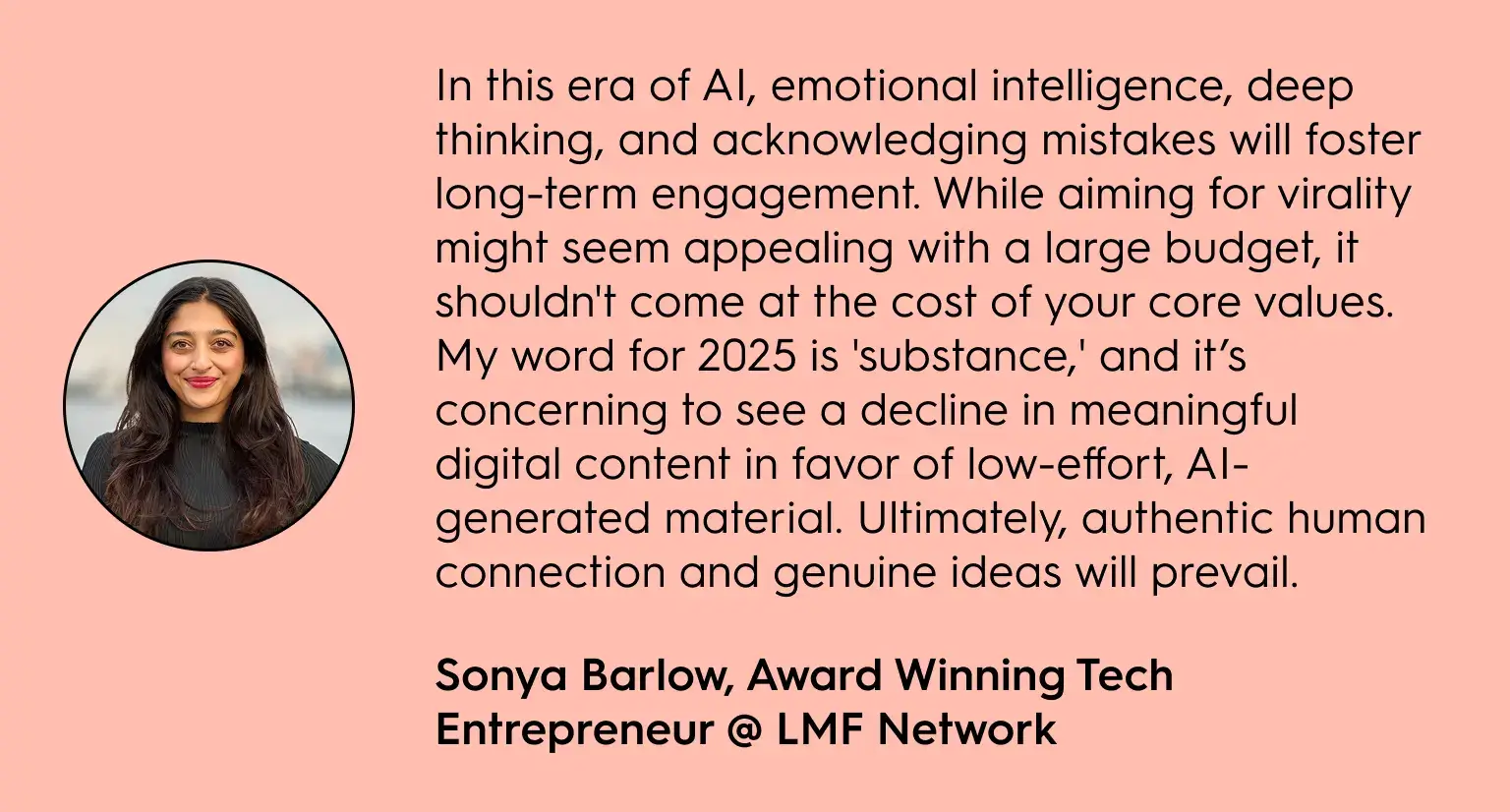
And she’s right. Virality doesn’t protect you. It exposes you.
Substance (the thing teams keep trying to prioritize but feel pressured to delay) is the real insurance.
Brands don’t lose trust because the internet is fast.
They lose trust because they traded depth for speed and hoped no one would notice.
Brands Are Reading the Wrong Signals
There’s a quiet irony in modern marketing: teams want fewer crises, yet their dashboards reward the exact behaviors that cause them. It’s almost unfair. The algorithm props up the metrics that make everyone feel successful, even when those same metrics increase the likelihood of a brand social media crisis. And yes, that contradiction has been messing with decision-making for years.
When the Dashboard Makes You Dumb
Most dashboards still prioritize the wrong signals. Reach. Views. Quick reactions. Anything with surface-level shine appears “high-performing,” even when it’s just high-risk. Meanwhile, the metrics tied to real crisis exposure are practically treated as optional reading… sentiment velocity, comment polarization, dips in save/share ratios.
And these risk signals correlate more strongly with crises than the “good-looking” numbers everyone celebrates. In fact, research shows how easily negative sentiment can snowball into escalation long before anyone identifies the pattern.
So yes, there’s a chance that the posts you’re congratulating yourself for are statistically similar to the posts that end up needing a late-night social media crisis response.
Dashboards don’t intend to mislead you. But most of them weren’t designed to protect your brand’s long-term stability; they were designed to reflect spikes. Spikes are fun. Spikes are addictive. Spikes also trigger internal confusion because they don’t warn you when a reaction starts shifting into something sharp enough to escalate.
Sentiment Is the Real Early-Warning System
If sentiment were a person, it’d be the only one in the room who tells the truth consistently. According to crisis-impact research, 47% of consumers prefer to hear about crises on social — a number that jumps to 63% for Gen Z.
If consumers are already watching your channels during a crisis, sentiment becomes the pre-crisis smoke. The tiny signals that whisper, “This is shifting,” long before the mentions chart starts climbing into something you don’t want to present in a meeting.
And yet, most brands only check sentiment after the situation has escalated. After the backlash. After the threads. After the internal message that begins with “We need a plan.” That delay is exactly why so many teams mistake reaction spikes for success when they are actually early markers of incoming trouble.
This is also where smarter social media crisis monitoring tools matter. Post-level analytics can reveal what got traction for the right reasons, what got saved, and what quietly sparked angry micro-communities you didn’t see forming. When your analytics show you the first signs of a future social media reputation crisis, you don’t need to “handle” a crisis — you prevent one.
The Problem Isn’t the Data. It’s the Interpretation.
Brands aren’t failing because they lack data. They’re failing because they’re grading themselves on the wrong parts of it. The dashboard rewards adrenaline, not durability.
And that’s how you get caught reading noise as applause, right before the internet teaches you the difference.
5 Red Flags Your Brand Is Quietly Trading Depth for Viral Wins
You rarely notice when your brand starts drifting. It’s subtle. It’s slow. And then one morning, you look at your own feed and feel a tiny pang of “wait… why did we post that?”
That, right there, is the first sign you’re drifting from depth into viral roulette. And viral roulette has never been a stable social media crisis strategy — only a fast track to the next thread you don’t want trending.
Red Flag #1 — Your Most Viral Posts Are the Ones You’re Ashamed to Present in QBR
You know the posts I mean. The ones that “performed,” yet you hope no senior stakeholder brings them up in the meeting because you can’t justify how they help anything long-term. When your top performers don’t align with your brand, that’s a crisis seed.
Almost every classic social media crisis case study starts with the same pattern: content misaligned with values, rewarded by the algorithm, ignored internally until it explodes.
Red Flag #2 — You’re Approving Content You Can’t Defend
If your team can’t explain why a post exists beyond “it should do numbers,” then it isn’t strategy — it’s bait. And bait is cheap until it becomes expensive.
You don’t need a complicated formula here. If the explanation feels thin, it probably is. Good content you’re willing to defend. Viral bait you hope everyone forgets.
.webp)
Red Flag #3 — Internal Pressure Is Dictating Creativity
There’s nothing more dangerous to long-term brand health than leadership who love spikes. Spikes produce adrenaline, not stability. Spikes feel like progress even when they quietly erode trust.
This is the silent trade-off: teams start shaping their ideas around what gets the fastest applause, not what safeguards the brand a year from now.
Red Flag #4 — Your Crisis Plan Only Exists in a Shared Drive No One Has Opened Since 2020
Many brands technically “have” a crisis plan. Few have practiced it.
If your team can’t walk through your social media crisis strategy without digging through folders, you don’t have a safety net — you have theatre. Crisis preparedness isn’t documentation; it’s repetition. If no one remembers the plan, the plan doesn’t matter.
Red Flag #5 — Spikes Are Celebrated More Than Saves
Spikes make everyone clap. Saves make everyone safe.
Saves show depth — the audience values your content enough to keep it. That’s actual affinity.
Yet many brands still reward the metric that signals noise while ignoring the metric that signals trust. And that is exactly how depth gets traded away without anyone noticing.
The Only Framework That Lets You Have Virality Without Losing Your Soul
Look, most brands don’t fail because someone posted a reckless tweet. They fail because no one built guardrails before the tweet existed. This is the gap — the tiny crack where a harmless idea mutates into a brand social media crisis while everyone assumes “it’ll probably be fine.”
You want virality without waking up in a Slack channel labelled “urgent”? Then you need a framework that stops the spiral before it starts. Not theatre. Not diagrams. Actual constraints that save your reputation from yourself.
Part 1 — Define Your “Depth Line”
Every brand has values, but only the serious ones have boundaries.
Your Depth Line is that boundary. The “we never cross this, even if the algorithm throws confetti at us” line.
When the Depth Line exists, your team has something rare: clarity. They know the tone you won’t flirt with. They know which trends are “no, not worth it.” They know what a misalignment looks like before the post goes live.
This isn’t corporate idealism — it’s operational relief.
Boundaries reduce decision fatigue. The fewer grey areas your team can wander into, the fewer accidental entries into social media crisis management you’ll need later.
Part 2 — Rebuild Your Metrics Stack
If your dashboard only rewards reach, your team will unintentionally build a crisis. And honestly, you can’t blame them. People chase the metric you celebrate.
So rebuild the stack:
You need sentiment velocity — how fast sentiment shifts.
You need save-to-view ratio — the closest thing to measuring depth.
You need backlash-probability patterns — every brand has them, though most pretend they don't.
You need viral-risk heuristics — lightweight indicators that tell you when a post may attract the wrong crowd.
It’s simple: if your metrics only show you output, not risk, you’re running half-blind.
{{form-component}}
Part 3 — Build a Crisis-Ready Approval Flow
Consumers expect responses in 30–60 minutes. Not hours. Not “we’ll convene after lunch.”
This means your approval flow needs to exist before you’re in trouble.
A crisis-ready flow isn’t bureaucracy; it’s speed. Who approves what? Who drafts? Who signs off? Who escalates? If you don’t know, your next “urgent thread” will teach you the hard way.
A prepared team doesn’t panic. A prepared team responds. And a prepared team dramatically reduces the chances that you’ll ever need to handle social media crisis fallout in the first place.
Virality isn’t the enemy. Lack of structure is.
Depth Isn’t Slow. Depth Is Insurance.
When you’ve lived through even one social media crisis, you start to realise something slightly uncomfortable: the brands that stayed quiet, steady, borderline boring on the surface… somehow avoided the global roasting you had to explain in a boardroom with dry mouth. It’s almost rude. They didn’t chase the viral sound. They didn’t cling to spikes like flotation devices. They chose depth, almost casually, as if they weren’t terrified of being forgotten. And weirdly, they weren’t the ones trending for the wrong reason by sunset.
Look at the “quiet-but-right” brands. The ones who stuck to substance while everyone else sprinted after the latest internet circus. They didn’t get the dopamine rush of a million-view moment, sure, but they also didn’t wake up to an angry thread dissecting their intent frame-by-frame. It’s odd, isn’t it? The brands that resist the urge to perform end up with fewer fires to put out, fewer frantic drafts, fewer meetings where someone says, “Can we control this?” while everyone knows the answer.
And if you zoom out a little (financially, emotionally, operationally) the math is brutal in a very simple way. Trending for a day feels good. Trending for the wrong reason costs you trust for a decade. Consumers don’t leave slowly anymore; 70% are out after two bad encounters, and 24% are gone after one. Depth is not slow in that context. Depth is a shield.
There’s no romance in virality during a crisis. When the wrong post hits the wrong pocket of the internet at the wrong hour and jumps borders before your team even meets, remember: the algorithm didn’t set the trap. Your incentives did.
Depth lasts. It holds shape under pressure. And whether anyone admits it or not, the fate of your next crisis thread hinges on it.








Heading 1
Heading 2
Heading 3
Heading 4
Heading 5
Heading 6
Lorem ipsum dolor sit amet, consectetur adipiscing elit, sed do eiusmod tempor incididunt ut labore et dolore magna aliqua. Ut enim ad minim veniam, quis nostrud exercitation ullamco laboris nisi ut aliquip ex ea commodo consequat. Duis aute irure dolor in reprehenderit in voluptate velit esse cillum dolore eu fugiat nulla pariatur.
Block quote
Ordered list

- Item 1
- Item 2
- Item 3
Unordered list
- Item A
- Item B
- Item C
Bold text
Emphasis
Superscript
Subscript


Recommended for you
%20(1).webp)
%20(1).webp)
%20(1).webp)